Traditional ads are losing attention fast. People now trust creators more than brands. They watch product reviews on YouTube. They buy from Instagram recommendations. They read blog comparisons before making a purchase.
But many business owners still face the same debate: influencer marketing vs affiliate marketing, which one is actually worth your budget?
If you don’t choose wisely, you risk spending your budget with nothing to show for it.
By the end of this guide, you’ll know exactly which strategy fits your business, and how to get the most out of both.
Let’s start with influencer marketing.
What Is Influencer Marketing?

Influencer marketing is a strategy where brands collaborate with creators to promote products or services. Simple as that – You pay them, they talk about you.
These creators already have an audience that follows and trusts them. Some audiences follow creators for fashion inspiration, some for tech reviews, while others watch fitness tips, travel content, or business advice.
When influencers recommend a product, their audience pays attention because the recommendation feels more personal than a traditional advertisement. That’s why brands pay influencers to create videos, publish reviews, post Instagram stories, or mention products in their content.
Key idea: You’re not paying for a sale. You’re paying for attention and trust. The conversion is a side effect, not the main goal.
Types of Social Media Influencers
- Nano Influencers (1K – 10K Followers): Small audience but extremely loyal. Their followers trust every word they say. Engagement rates are the highest in this category. Perfect for local businesses, hyper-niche products, and tight budgets.
- Micro Influencers (10K – 100K Followers): This is the sweet spot for most brands. Their audience is still niche enough to care but big enough to matter. Engagement rates stay strong. Cost stays reasonable. Great for DTC brands, SaaS tools, and WordPress plugins.
- Macro Influencers (100K – 1M Followers): Bigger reach but less personal connection. Their followers are more passive. Good for product launches where visibility is the only goal. Expect to pay more and expect lower engagement per follower.
- Celebrity Influencers (1M+ Followers): Massive exposure overnight. But it comes at a massive price. One post can cost $10,000 or more. ROI is hard to track. Unless your product is built for the mass market, celebrity influencers are usually not worth the risk.
How Influencer Marketing Works
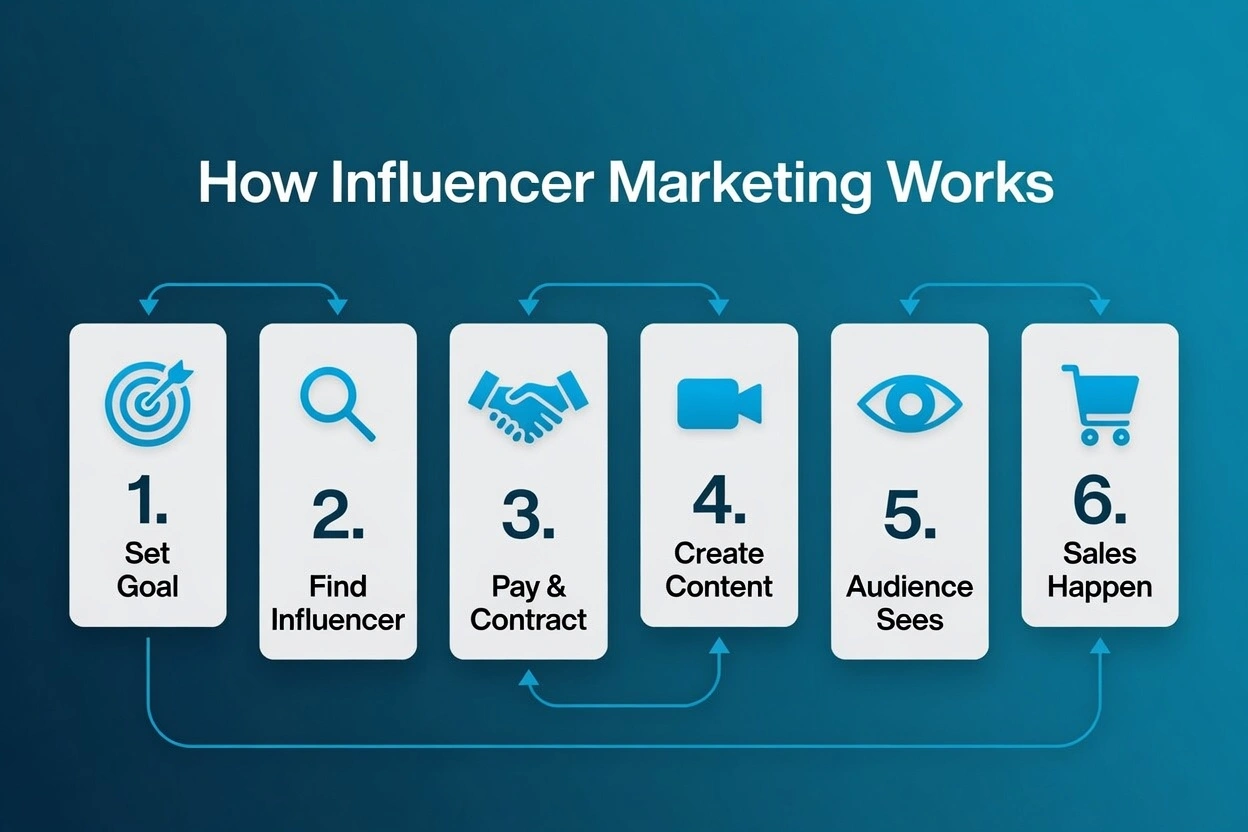
The process is straightforward, but every step matters. Here is exactly how a successful influencer marketing campaign comes together, from planning to results.
1. Set a Goal
First, decide what you want. Brand awareness? Product launch? More sales? Your goal decides everything else.
2. Brand Find The Right Influencer
A company wants to promote a product. So, they look for influencers whose audience matches their target customers.
For example, a skincare brand may work with beauty creators on Instagram or TikTok.
3. Brand Pays the Influencer
After finding the right creator, the brand contacts the influencer and discusses the collaboration. This can include the type of content, posting date, campaign goal, and payment.
In most influencer marketing campaigns, the brand pays the influencer upfront. The payment may depend on follower count, engagement rate, niche, or content format.
4. Influencer Creates Content
The influencer then creates content using the product. It can be a review, tutorial, short video, unboxing video, or daily lifestyle post.
The content usually feels more personal than regular advertisements because influencers share their own experience with the product.
5. Audience Sees the Content
Once the content is published, followers start seeing it on their feed. People watch the video, read the caption, or click the product link.
Because the recommendation comes from someone they trust, it gets more attention.
6. Some People Buy the Product
After seeing the content, some viewers decide to buy the product. Others may visit the website first and purchase later.
This is how influencer marketing helps brands increase visibility, trust, and sales.
What Is Affiliate Marketing?

Affiliate marketing is a performance-based marketing strategy where businesses reward people for generating sales.
A company gives affiliates a unique tracking link. The affiliate promotes the product through blogs, YouTube videos, social media posts, newsletters, or review websites. When someone purchases through that special link, the affiliate earns a commission.
Unlike influencer marketing, businesses usually do not pay upfront. Payment happens only after successful conversions. That’s why affiliate marketing is considered lower risk for many companies.
Affiliate marketing is especially popular among SaaS companies, hosting businesses, eCommerce brands, and WordPress plugin companies because it focuses heavily on measurable results and long-term revenue.
Key idea: You’re not paying for reach. You’re paying for results. Every dollar spent comes with a measurable return.
How Affiliate Marketing Works
You click a link in a blog post, buy a product, and the blogger earns a commission – simple, right? But behind that one click is a well-built system that brands and affiliates both rely on.
Here is how the whole thing comes together, step by step.
1. Brand Sets Up the Program
First, the brand creates an affiliate program. They decide the commission rate, cookie duration, and payout rules. Tools like WC Affiliate make this simple; set it up once inside WordPress and it runs automatically.
2. Affiliate Joins the Program
Bloggers, YouTubers, and content creators apply to join. The brand approves of them. A good affiliate already has an audience that trusts their recommendations.
3. Affiliate Gets a Unique Link
Every affiliate gets their own tracking link. This link is how the brand knows exactly who sent the customer.
4. Affiliate Promotes the Product
The affiliate writes a blog post, makes a YouTube review, or shares on social media. They include their unique link naturally inside the content. The best affiliates don’t hard-sell, they educate and recommend.
5. Reader Clicks the Link
A reader finds the content, trusts the recommendation, and clicks the affiliate link. The tracking system records the click and stores a cookie on the reader’s browser.
6. Reader Makes a Purchase
The reader lands on the product page and buys. The tracking system connects that sale back to the affiliate’s unique link automatically.
7. Commission Gets Paid
If the visitor buys something, the affiliate earns a commission. The brand gets a sale, and the affiliate gets paid for the referral.
Influencer Marketing vs Affiliate Marketing: Quick Comparison
Before we go deeper, here is a high-level snapshot of how these two strategies differ across the metrics that matter most to a growing business:
| Feature | Influencer Marketing | Affiliate Marketing |
| Main Goal | Brand awareness | Sales and conversions |
| Payment Type | Fixed fee or sponsorship | Commission-based |
| Risk Level | Higher upfront cost | Lower financial risk |
| ROI Tracking | Harder to measure | Easy to measure |
| Best For | Launch, lifestyle, DTC | Ecommerce and SaaS |
| Audience Trust | Very high | Medium to high |
| Speed | Fast visibility | Slower but long-term |
| Content Style | Personal storytelling | SEO and review-focused |
| Traffic Source | Social media | Blogs, websites, YouTube |
| Long-Term Results | Short-term spikes | Evergreen traffic |
Affiliate Marketing vs Influencer Marketing ROI
ROI matters a lot, especially for small businesses with limited budgets. Influencer marketing can create fast attention and sometimes even viral sales. But this momentum often fades quickly after the campaign ends.
Affiliate marketing works differently. Global affiliate marketing spending is projected to reach around $19.4 billion in 2026 as more brands shift toward performance-based marketing models.
Here is how they actually compare
1. How Each Strategy Makes Money
Affiliate marketing makes money through content creation. Affiliates write blog posts, record YouTube reviews, and publish tutorials. People find that content through Google. They read, trust, and buy.
Influencer marketing makes money through attention. An influencer posts once. Their audience sees it, feels curious, and some of them buy.
One runs on search traffic. The other runs on social trust.
2. Short-Term vs Long-Term Returns
Influencer marketing returns come fast. You see traffic and sales within 24 to 48 hours of a post going live. But that traffic disappears just as fast.
Affiliate marketing returns come slowly. A blog post might bring zero sales in month one. By month six, that same post is ranking on Google and sending buyers every single day.
3. Which One Brings Recurring Sales
Affiliate content never stops working.
A review post published today can rank on Google for years. Every day, new people find it, click the link, and buy. The affiliate earns. You earn. Nobody did any extra work.
Influencer content has a shelf life of 48 to 72 hours. After that, engagement drops and sales stop.
4. Where Brands Waste Money
Most brands waste influencer budgets on the wrong creators.
They pick high follower counts over niche relevance. The post goes live. Engagement is low. Sales are lower. The $1,000 campaign returns $200 in revenue.
With affiliate marketing, waste is almost impossible. You pay only when a sale happens. A bad affiliate simply earns nothing. Your budget stays safe.
5. Which Delivers Better ROI for WooCommerce Stores
For WooCommerce stores and WordPress plugins, affiliate marketing delivers a stronger ROI almost every time.
Why? Because buyers search before they purchase. They Google “best WooCommerce affiliate plugin” or “ThumbPress review.” Affiliate content meets them exactly at that moment.
Influencer marketing shows your product to people who were not looking for it. Some will buy. Most will scroll past.
Quick takeaway:
- WooCommerce and SaaS = affiliate marketing wins on ROI
- Fashion, beauty, lifestyle = influencer marketing wins on ROI
Cost Comparison: Which Is More Affordable?
Influencer marketing usually requires upfront investment. Even smaller creators may charge a few hundred dollars for sponsored posts. Larger influencers may ask for thousands.
Affiliate marketing feels safer financially because companies pay only after actual sales happen. This makes it more affordable for startups, bootstrapped businesses, and smaller ecommerce stores.
Influencer Marketing Costs
Usually includes:
- Sponsorship fees
- Product gifting
- Campaign management
- Paid boosts
Costs can rise quickly. Big creators may charge thousands per post.
Affiliate Marketing Costs
Usually includes:
- Affiliate commissions
- Tracking software
- Payout systems
Lower upfront risk. You mostly pay after revenue happens. That makes affiliate marketing easier for startups.
When to Choose Each Strategy
Choose Influencer Marketing When:
Influencer marketing works best when visibility matters more than long-term search traffic.
If your goal is fast attention, product awareness, social proof, or viral exposure, influencer marketing can work extremely well.
It is especially powerful for visual industries like fashion, beauty, fitness, food, travel, and lifestyle products. A strong Instagram Reel or TikTok video can quickly influence buying decisions.
Brands launching new products also benefit heavily from influencer campaigns because creators can generate excitement very quickly.
Choose Affiliate Marketing When:
Affiliate marketing works better when businesses care more about long-term growth and recurring sales.
If your product requires research before purchasing, affiliate marketing usually performs better. People often search Google for reviews, comparisons, and tutorials before buying software, hosting services, plugins, or online tools.
Affiliate marketing is also ideal for businesses wanting better ROI tracking and lower financial risk.
Which Type of Business Benefits Most?
Influencer Marketing Works Better for These Businesses
Some businesses naturally fit influencer marketing better.
Beauty Brands: People want visual proof before buying skincare or makeup.
Fashion Stores: Outfit videos influence buying decisions heavily.
Fitness Products: Workout creators build strong audience trust.
Food Brands: Recipe videos and food reviews perform extremely well.
Mobile Gadget Brands: Tech influencers can quickly create hype around products.
Affiliate Marketing Works Better for These Businesses
SaaS Products: Software buyers often compare tools before purchasing.
Hosting Companies: Review blogs drive huge hosting affiliate revenue.
WordPress Plugin Businesses: Tutorial content converts very well.
Online Courses: Educational products perform strongly through affiliate partnerships.
B2B Tools: Decision-makers often read detailed comparisons before buying.
Popular Platforms for Influencer & Affiliate Marketing
Influencer marketing mainly happens on platforms like Instagram, TikTok, YouTube, Facebook, and Pinterest.
Affiliate marketing usually operates through networks and platforms such as ShareASale, Impact, PartnerStack, CJ Affiliate, and Amazon Associates.
Each platform serves different audiences and business goals, so choosing the right one matters.
Pros and Cons of Each Strategy
Influencer marketing delivers quick visibility, social proof, and engagement, but it can be costly and difficult to measure accurately. On the other hand, Affiliate marketing focuses on performance-driven growth and long-term results, though it often takes more time and requires active affiliate management.
Pros of Influencer Marketing
1. Builds Fast Brand Awareness: Influencers help brands reach a large audience quickly. A single post or video can introduce products to thousands or even millions of people. This works especially well for fashion, beauty, fitness, food, and lifestyle brands.
2. Creates Strong Trust: People trust influencers they follow regularly. Studies show 61% of consumers trust influencer recommendations when making purchase decisions. (WifiTalents)
Followers often value their opinions more than traditional ads. Because of this connection, audiences are more likely to try recommended products.
3. Great for Visual Products: Products that look good in photos or videos usually perform better in influencer campaigns. Items like makeup, clothing, home decor, travel experiences, and tech gadgets attract more attention through visual content.
4. Increases Social Proof: When audiences see influencers using a product, the brand feels more reliable and popular. This social proof helps reduce hesitation and encourages more people to buy.
Cons of Influencer Marketing
1. Expensive Campaign Costs: Big influencers often charge high fees for sponsored posts. Sometimes brands spend a lot but do not get enough sales in return.
2. Difficult ROI Measurement: Measuring real results can be difficult. Without tracking links or coupon codes, brands may not know which sales came from influencers.
3. Fake Followers and Engagement: Some influencers use fake followers or artificial likes and comments. This can reduce campaign performance and waste marketing budgets.
4. Short-Term Traffic: Influencer campaigns usually create quick attention and traffic. But after the promotion ends, the traffic often drops quickly.
Pros of Affiliate Marketing
1. Lower Financial Risk: Brands only pay affiliates when a real sale happens. This reduces wasted marketing costs and makes affiliate marketing budget-friendly.
2. Better ROI Tracking: Businesses can easily track clicks, sales, revenue, and conversion rates. This helps them understand which affiliates and campaigns perform best.
3. Long-Term SEO Traffic: Affiliate blog posts and reviews can rank on Google for years. A single high-ranking article can continue generating traffic and sales without extra ad spending.
4. Easy to Scale: Brands can partner with many affiliates from different countries and niches. This helps businesses grow their reach faster without building a large internal marketing team.
Cons of Affiliate Marketing
1. Slower Growth at First: Affiliate marketing takes time to grow. Most affiliates depend on SEO, blogs, and content marketing, so results usually come slowly.
2. High Competition: Many affiliates promote the same products and keywords. Because of that, getting attention and traffic becomes difficult.
3. Lower Emotional Connection: Affiliate content mainly focuses on reviews, comparisons, or product details. It often lacks the personal connection that influencer content creates.
4. Fraud and Spam Risks: Some affiliates use fake clicks, spam links, or dishonest methods to earn commissions. Brands need proper tracking and monitoring systems to avoid fraud.
Common Mistakes Store Owners Make
- Choosing the wrong influencer: Follower count means nothing if the audience doesn’t match your product. A gaming influencer promoting a skincare product? That’s wasted money.
- Not tracking affiliate links properly: If you can’t see which affiliate drove which sale, you’re flying blind. Set up your tracking before your program goes live.
- Offering too-low commissions: Good affiliates have options. If your commission is 5% and competitors offer 30%, they’ll promote the competitor. Pay enough to attract quality partners.
- Ignoring fake followers: Always check engagement rate before signing an influencer deal. 100K followers with 0.5% engagement is a red flag. Aim for 3–6%+ engagement minimum.
- Sending traffic to the wrong page: Don’t send affiliate traffic to your homepage. Create a dedicated landing page with a clear offer, strong CTA, and fast load speed.
- Expecting Instant SEO Results: Affiliate SEO content needs time to rank on search engines. Traffic and sales usually grow slowly, so patience and consistency are important.
Latest Influencer and Affiliate Marketing Trends in 2026
- Micro and Nano Influencers Are Growing Fast: Brands now prefer smaller creators with loyal audiences because they often generate higher engagement and stronger trust.
- Short-Form Video Continues to Dominate: Platforms like TikTok, Instagram Reels, and YouTube Shorts drive massive reach, engagement, and affiliate sales through quick, attention-grabbing content.
- Authentic Content Matters More Than Ever: Audiences respond better to natural reviews, personal experiences, and less-polished content instead of traditional ad-style promotions.
- AI Influencers and Virtual Creators Are Expanding: AI-generated creators are becoming more common in industries like fashion, gaming, and technology, with some brands running full campaigns using virtual influencers.
- Performance-Based Campaigns Are Increasing: Brands are focusing more on clicks, conversions, and measurable ROI. Many influencer campaigns now include affiliate links, commission structures, and advanced AI-powered tracking.
- Social Commerce and Live Shopping Keep Growing: Users can now discover, interact with, and buy products directly inside apps through live streams, creator storefronts, and social shopping features like TikTok Shop and Instagram Shop.
- Creator Commerce Is Becoming Mainstream: Creators are building personal storefronts, curated product collections, and branded recommendations, turning audiences into long-term customers.
Creating a Hybrid Strategy: The Smartest Move
Many smart brands now combine influencer marketing and affiliate marketing instead of choosing only one strategy. Here’s how it works:
1. Run an influencer campaign first: Use influencers to build awareness. Get people to know the brand. This is your awareness layer.
2. Give those same influencers an affiliate link: After the paid campaign, give them a commission-based link. Now they have a reason to keep promoting without additional payment from you.
3. Turn top performers into long-term partners: The influencers who actually drive sales become your affiliate partners. They promote because they earn. You pay only for results.
4. Feed affiliate SEO traffic with influencer content: Repurpose influencer-created content into blog posts and YouTube reviews. It drives SEO traffic for months after the campaign ends.
This hybrid model combines the trust of influencer marketing with the performance-focused nature of affiliate marketing. As a result, businesses get both fast visibility and long-term revenue potential.
Final Verdict
There is no single winner between influencer marketing and affiliate marketing.
If your goal is fast visibility, social proof, and audience engagement, influencer marketing can deliver excellent results.
If your focus is recurring revenue, long-term traffic, and measurable ROI, affiliate marketing usually works better.
But in many cases, the strongest growth comes from combining both strategies. Influencers can create attention quickly. Affiliates can keep driving sales over time. When businesses use both strategically, they build a much stronger marketing system for long-term growth.
Grow Your Affiliate Business with WC Affiliate
Get practical tips, useful guides, product updates.
Frequently Asked Questions
Affiliate marketing is usually better for ROI and long-term growth. Influencer marketing is better for awareness and engagement.
Affiliate marketing is usually cheaper because businesses pay after conversions happen.
Yes. Many influencers now promote products using affiliate links and commission-based partnerships.
Yes. Affiliate marketing is one of the best low-risk growth strategies for startups and small businesses.