Starting a WooCommerce affiliate program is easy. Getting people to actually join it? That’s where most store owners get stuck.
The usual approach is to install an affiliate plugin, set up the program, publish a page, and wait. A week goes by. Then a month. Still no affiliates.
The problem isn’t your product or your commission rate. It’s that no one is coming to you, and you’re not going to them.
The good news: you don’t need a big audience, a famous brand, or a marketing team to fix this. You just need a simple 30-day affiliate recruitment strategy and the willingness to send a few messages each week.
Let’s get into it.
Why Your First 10 Affiliates Matter
Ten affiliates might not sound like much. But your first 10 are more valuable than they seem.
Approximately 81% of brands use affiliate programs to grow revenue. (Affiliate Statistics)
They prove your WooCommerce affiliate program works. They help you find out if your commission rate is competitive, if your tracking is set up correctly, and if your pitch actually lands. You’ll learn more in the first 30 days than any research can teach you.
And even two or three active affiliates can drive your first real affiliate sales. That’s revenue you didn’t have to pay for upfront.
Start there. Get to 10, learn from them, then scale.
Who Are Your First 10 Affiliates?
You don’t need to cold-email strangers to recruit affiliates for your WooCommerce store. The best ones are often already close by.
Here are four types that work well for new stores:
1. Existing customers: Someone who already bought from you and liked it is a natural fit. They can speak genuinely about your product. A simple email asking if they’d like to earn a commission for referrals goes a long way.
2. Niche bloggers and content creators: Look for people writing about topics related to your products. If you sell handmade skincare, find bloggers writing about natural beauty routines. They already have an audience that trusts them, and affiliate marketing for WooCommerce beginners often starts exactly here.
3. Micro-influencers: You don’t need someone with 500k followers. An Instagram account with 3,000 engaged followers in your niche can drive real sales. Smaller audiences often have better trust and higher conversion rates.
4. Complementary product sellers: Think about who sells things that pair well with yours. If you sell yoga mats, someone selling yoga clothing might love to recommend you to their customers, and you can do the same for them.
Start by making a list of 20 to 30 names. You won’t reach all of them, but having a pool gives you room to work.
Where to Find Your First Affiliates
Now that you know who you’re looking for, here’s where to actually find them.
- Facebook Groups: Search for groups in your niche. Look for active members who post helpful content, not just people promoting themselves. These are the ones with real influence on the group. This is one of the most reliable organic affiliate recruitment strategies available to WooCommerce store owners.
- Reddit: Subreddits like r/weddingplanning, r/MealPrepSunday, or r/financialindependence, whatever fits your niche, are full of trusted community voices. Read threads, find people giving advice others rely on, and note their usernames.
- YouTube: Search for review videos or tutorials related to your product category. A YouTube creator with 2,000 subscribers and consistent views on every video is a solid prospect. This is often an overlooked channel when people think about how to find affiliates for a WooCommerce store.
YouTube has over 2.83 billion logged-in users monthly. This makes it one of the highest-traffic discovery platforms for affiliate content
- Instagram hashtags: Search hashtags related to your niche. Look at posts with strong engagement relative to follower count. That ratio tells you more than the follower number alone. Recruiting micro-influencers for affiliate marketing through hashtag research is low-cost and surprisingly effective.
- Niche newsletters: Some of the best affiliates run small email newsletters with highly engaged readers. You can find them through Substack, Beehiiv, or just by searching “[your niche] newsletter.”
As you find people, add them to a simple spreadsheet: name, platform, contact info, and a note on why they’re a good fit. This keeps your affiliate outreach organized from day one.
Set These Up Before You Start Recruiting
Don’t spend weeks on this. You just need the basics in place before you reach out to anyone.
A working signup and tracking setup.
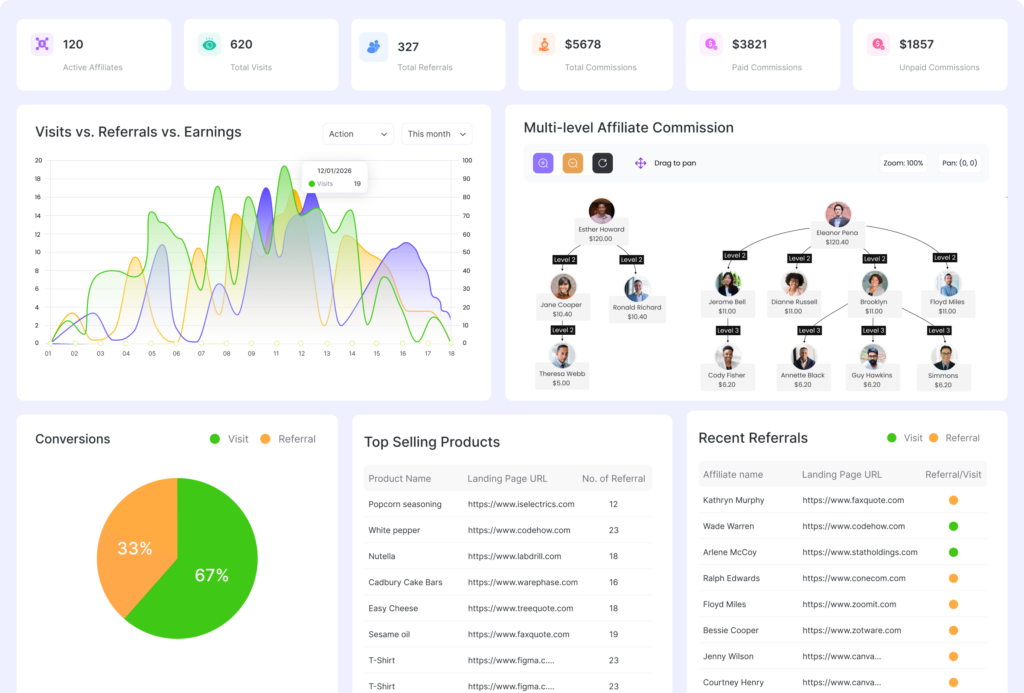
Use a plugin like WC Affiliate to handle this. It gives you an affiliate signup form, an admin dashboard, an affiliate-facing dashboard, unique tracking link generation, and automatic sale recording. Getting this right before you recruit saves you a lot of headaches later. It’s the foundation of any serious WooCommerce affiliate program.
A commission rate that makes sense.
Affiliates will only promote your store when the earning potential feels worth their time. For physical products, 5 to 15% is common. For digital products, 20 to 40% is more typical. Set something competitive, and make sure your margins can handle it.
A dedicated affiliate page on your store
This is where potential affiliates go to learn about your program. Keep it simple: what you sell, what commission you offer, and how they get paid. No one will sign up if they can’t find the details. This page is essential when you’re figuring out how to launch an affiliate program on WooCommerce the right way.
A welcome email is ready to go
The moment someone joins, they should hear from you. WC Affiliate handles this automatically. More on this in the onboarding section below.
That’s it. You don’t need a perfect program on day one. You need a working one.
How to Recruit Your First 10 Affiliates | A 30-Day Plan
Getting your first affiliates is simpler than it looks. Follow these steps, stay consistent, and keep refining your approach.
Week 1: Build Your Target List
Before you send a single message, get organized.
You’ve identified the types of affiliates you want and the platforms where they live. Now it’s time to study the actual people. Go through your list one by one. Look at their content, their audience size, their engagement, and how closely their niche aligns with your product. This is your niche affiliate recruitment strategy in action.
Shortlist the 15 to 20 people who fit best. This list will guide everything in the next three weeks.
Then write a short, personal pitch for each one based on what you noticed. Focus on one question they’ll be asking themselves: “Why should I join this program?” Keep it clear and real. It doesn’t need to sound fancy.
Try something like: “I sell [product], it’s a good fit for your audience, and you’ll earn 15% on every sale you drive. I’ll give you everything you need to get started.” That’s enough to open a conversation.
Week 2: Start Outreach. Don’t Wait.
This is where most people hesitate. Don’t.
Start with the easiest targets first. Message micro-influencers in your niche. Email bloggers who write about topics related to your product. And don’t overlook your existing customers.
Someone who already bought from you and liked it is your best possible affiliate, and this approach lets you recruit affiliates without paying upfront for advertising or promotion.
Keep your messages short. Here are a few affiliate outreach message templates you can use or adapt:
Friendly DM (Instagram, X, etc.): “Hey [Name], love what you share about [topic]. I run a WooCommerce store selling [product], and I think it would be a natural fit for your audience. I have an affiliate program, 15% per sale, paid monthly. Want me to send over the details?”
Short email for bloggers: “Hi [Name], I found your article on [topic], and it’s exactly the kind of content my customers read. I sell [product], and we have a WooCommerce affiliate program that might be worth your time. 15% commission on every sale you refer, tracked automatically. Happy to send a free sample if you’d like to try it first. Let me know.”
Personalized version when you know their work: “Hi [Name], I read your post about [specific thing they wrote]. The part about [specific detail] was genuinely useful. I think my product would resonate with your readers for similar reasons. I’d love to bring you on as an affiliate. Mind if I share the details?”
Personalized outreach emails significantly outperform generic templates, delivering 29% higher open rates and, in many cases, over 41% higher engagement or click-through rates. (Sendr.ai)
Short, specific, and focused on them. That’s what gets replies when you’re learning how to contact potential affiliates.
Week 3: Follow Up and Build Interest
Most people won’t reply to your first message. That’s normal. Don’t stop.
Wait five to seven days, then send one follow-up. Keep it brief:
“Hey [Name], just following up on my last note. No pressure at all. Just wanted to make sure it didn’t get buried. Happy to answer any questions if you have them.”
That’s enough. Two messages are the strategy. Three starts to feel like pressure.
While you’re following up, answer questions fast. If someone asks about your commission rate, payout method, or product, reply the same day. Speed signals that you’re easy to work with. That matters when you’re trying to convince people to join your affiliate program.
You can also offer a small incentive for early joiners. A higher commission rate for the first month or a free product sample can push someone from “maybe” to “yes.”
Week 4: Activate Your First Affiliates
Getting someone to sign up is step one. Getting them to actually promote is step two.
When someone joins, send a short welcome message. Thank them, confirm their affiliate link, and give them one simple first task: share the link somewhere or post about it once. Don’t overwhelm them with a list of things to do. This is where affiliate onboarding tips matter most.
Make it easy by giving them ready-to-use content. A product description they can copy. A couple of images or banners. A few caption ideas for social posts. The easier you make it, the faster they start. WC Affiliate’s banner builder lets you create these assets and make them available directly inside the affiliate dashboard.
Check in after a week. Ask if they have questions or need anything. This small step keeps momentum going and shows you’re invested in their success too. It’s a core part of any solid affiliate activation strategy.
Once you finish one batch of affiliate leads, move on to the next. Keep the process going.
At the same time, encourage your affiliates to bring in others using WC Affiliate’s multi-level commission. This reduces your workload and helps both you and your early affiliates earn more.
What Makes People Say ‘Yes’
Getting your first 10 affiliates comes down to one thing: replies. And in most cases, you won’t get many. That’s normal. Many people simply won’t be interested in your product.
So instead of expecting replies, focus on improving your chances of getting them. Here’s what matters:
- Clear earning potential. “15% per sale, paid monthly, no minimum threshold” is easy to say yes to. Vague answers create doubt. This is the single most important thing when people are deciding how to get affiliates for a new ecommerce store.
- Easy setup. If joining feels complicated, people walk away. A single signup link and an automatic welcome email with their tracking link remove all friction.
- A product that solves a real problem. If your product genuinely helps people, affiliates can feel good about promoting it. That matters more than you’d think.
- A personal approach. Generic mass messages get ignored. When someone feels like you actually looked at their content and chose them specifically, they pay attention. This is the most underrated part of any influencer outreach for affiliate marketing.
Mistakes to Avoid When Recruiting Affiliates
You won’t sign up every affiliate you reach out to. It’s a trial-and-error process. But avoid these common mistakes:
- Waiting for affiliates to find you. A signup page on your website is not a recruitment strategy. You have to go to people.
- Writing long outreach messages. A five-paragraph email about your store, your product, your mission, and your affiliate program will get deleted. Keep it to three or four sentences.
- Being vague about commissions. “We offer competitive rates” tells someone nothing. Give them a number.
- Skipping the follow-up. One message is not a strategy. Most replies come from the second message.
- Disappearing after someone signs up. Affiliates don’t drive sales on day one. That’s normal. Stay in touch early, help them get started, and they’re far more likely to follow through.
Conclusion
Recruiting your first 10 affiliates for your WooCommerce store isn’t about having the right tools or the biggest brand. It’s about doing the outreach that most of your competitors are too impatient to do.
Make your list today. Write your message tonight. Start sending tomorrow.
Your first affiliate could reply within minutes of receiving your message. And once you have 10, you’ll wonder why you didn’t start sooner.
Frequently Asked Questions
It varies, but micro-influencers and bloggers often reply within a few days if your message is short and relevant. Larger accounts may take longer or not reply at all. That's why you start with a list of 20 to 30, not five.
Skip that source and focus on niche creators and bloggers first. You can always come back to customer outreach once orders start coming in.
For physical products, 10 to 15% is a solid starting point. For digital products, 20 to 30% is more common. If you're unsure, look at what similar stores are offering and match or slightly beat it.
Yes, practically speaking. Without one, you'd be manually tracking every referral, calculating commissions, and handling payouts yourself. A plugin like WC Affiliate automates all of that and gives affiliates their own dashboard to track their performance, so you can focus on growing the program instead of managing it.
Send one check-in message after a week. Offer to help with content or materials. If they're still inactive after a few weeks, focus your energy elsewhere. Some people sign up out of curiosity and never follow through. That's normal.
Yes. You don't need sales history to start recruiting. What you need is a product, a working affiliate setup, and a clear pitch. Some affiliates actually prefer working with newer stores because there's more room to grow together.
Your affiliate plugin handles this. WC Affiliate shows you clicks, conversions, and revenue per affiliate in a dashboard. Check it weekly, especially in the first month.